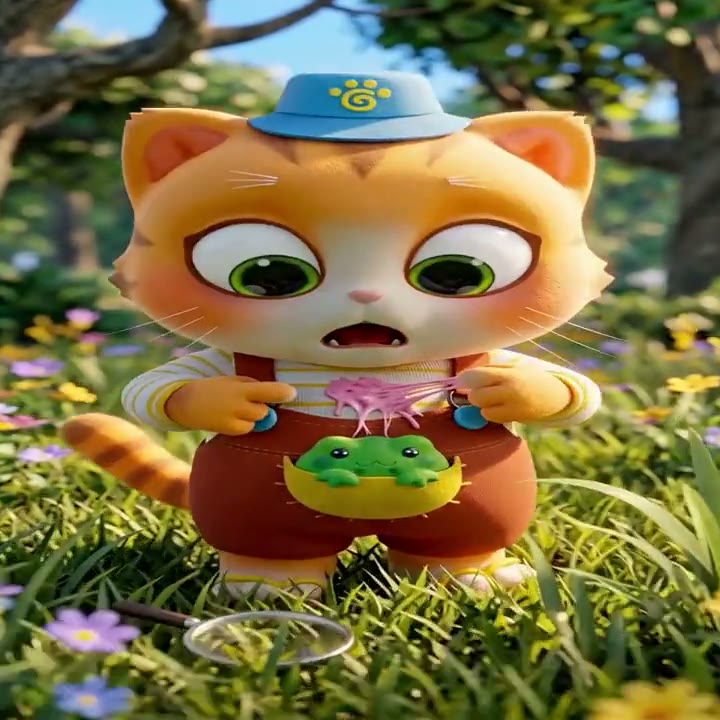
A virtual influencer is a digital character that appears consistently enough for audiences to recognize its personality, follow its stories, and understand its relationship with a brand. For companies that already own character intellectual property, this can be more powerful than creating a temporary campaign face.
The opportunity is not simply to place a 3D mascot on social media. It is to develop an owned digital personality with a clear point of view, repeatable formats, and room to grow.
What is a virtual influencer?
A virtual influencer is a fictional personality designed to communicate through content, community moments, partnerships, and sometimes live interaction. It may look human, stylized, animal-like, or entirely imaginary.
What makes the character influential is not its rendering style. Influence comes from continuity:
- a recognizable appearance;
- a consistent voice and emotional range;
- recurring subjects or interests;
- a relationship with a specific audience;
- regular stories that reward attention;
- credible behavior inside the character's world.
A character becomes followable when people can anticipate what it cares about without knowing exactly what it will do next.
Owned character versus rented attention
Traditional influencer partnerships can provide reach and human credibility. An owned virtual influencer solves a different problem: it creates a long-term communication asset that belongs to the brand or IP holder.
The company can define the character's visual rules, personality, approved topics, partnerships, and evolution. Past content continues to build recognition for the same identity rather than transferring all familiarity to an external spokesperson.
Ownership also creates continuity across channels. The same character can appear in a short video, a product story, an event screen, or a live audience experience without becoming a different campaign device each time.
This does not make every partnership appropriate. The character still needs a reason to participate and a point of view audiences can understand.
The foundations of a credible virtual personality
A specific role
Decide why the character exists in the audience's life. Is it an entertainer, curious learner, helpful guide, playful commentator, or brand-world explorer? A narrow starting role is easier to understand than a character trying to represent every brand message.
A consistent identity
Document the visual details, expressions, movement, voice, humor, and boundaries that make the character recognizable. Consistency should survive different environments and content formats.
Repeatable story formats
Strong formats make publishing sustainable. A character might share a weekly discovery, react to a familiar situation, try a simple challenge, or take the audience behind the scenes of its world.
Audience participation
Questions, reactions, and community themes can shape future stories. Participation becomes especially valuable when the character can respond through live streams or events.
Selective brand integration
The character should not become a moving product label. Products and partnerships work best when they fit an existing interest, action, or story.
How virtual influencer content should develop
Start with identity-building content before expecting commercial influence. Early posts should help audiences learn the character's name, behavior, world, and emotional tone.
Next, introduce recurring formats. Repetition at the format level helps recognition while new situations keep the content fresh. Once the character has a stable presence, partnerships can be evaluated against its personality and audience.
A practical progression is:
- establish the character's visual and personality system;
- publish a focused set of repeatable stories;
- observe what audiences remember and respond to;
- expand successful themes across platforms;
- introduce fitting products, collaborations, and live appearances;
- refine the character without changing its core identity.
This is closer to building a media property than producing a one-off advertisement.
Brand safety and creative control
An owned character gives the company a high degree of control, but that control still needs a system. Define who approves visual changes, which topics require specialist review, what the character cannot claim, and how live responses are handled.
The personality should also include refusal and handoff behavior. A trustworthy character does not need to answer every question. It needs to remain appropriate, transparent, and in character.
How to measure a virtual influencer
Follower count alone cannot show whether the character is becoming a valuable brand asset. Look for signs of recognition and relationship:
- people using the character's name;
- comments that reference its personality or recurring stories;
- saves, shares, completion, and repeat viewing;
- audience ideas that can inspire new content;
- recognition across videos, still images, and live appearances;
- commercial integrations that feel natural rather than disruptive.
These signals reveal whether the audience is following a personality or merely viewing isolated posts.
Virtual influencer FAQ
Does a virtual influencer need to look human?
No. A mascot or stylized character can be a virtual influencer when it has a consistent identity, content rhythm, and relationship with an audience.
Can a virtual influencer appear live?
Yes. A real-time character can join streams, events, and stage experiences while preserving the same personality seen in produced content.
Is an owned virtual influencer a replacement for human creators?
Not necessarily. It is a distinct brand asset. Human creators can still collaborate with the character, host experiences, or extend its stories.
Build the personality before the following
The strongest virtual influencers are not defined by novelty. They are defined by the clarity of their identity and the consistency of their presence.
NeoAvatar helps character owners connect repeatable character content with real-time performance, turning an existing IP into a digital personality audiences can continue to meet.