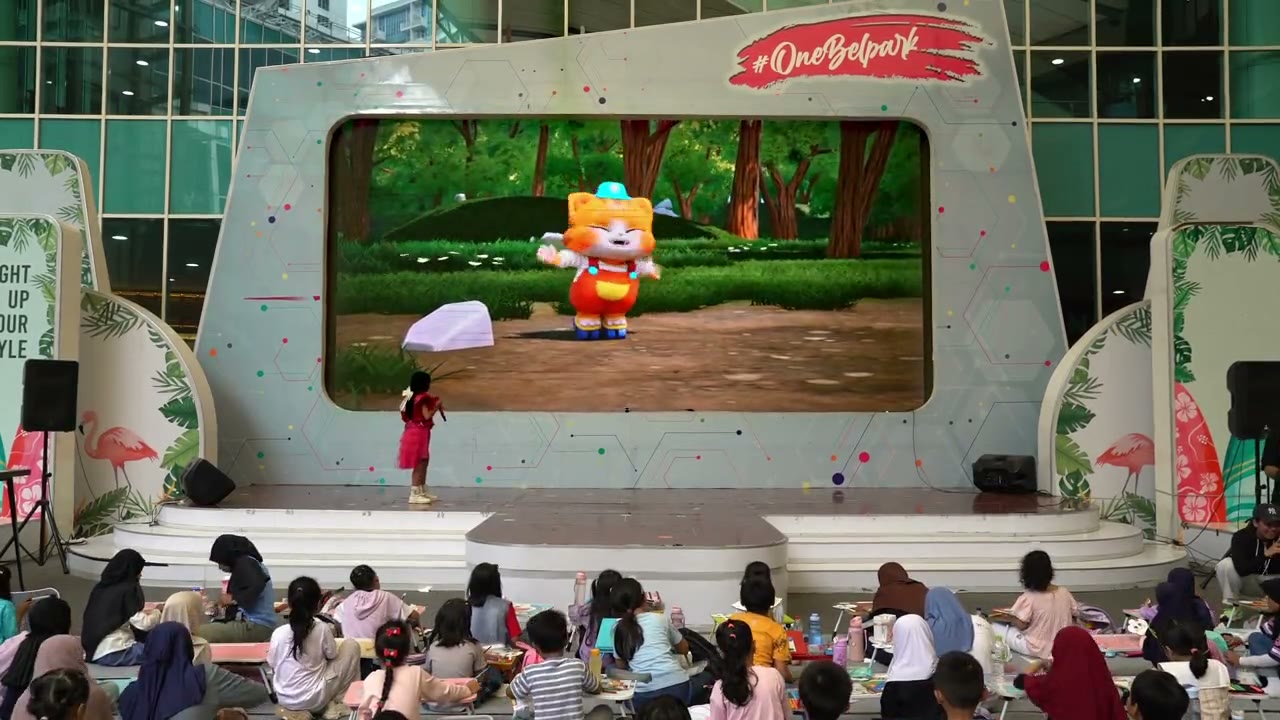
A character on a large screen can attract attention. A character that notices the room, responds to a host, and reacts with the audience can create a shared memory.
Live avatar events combine real-time character performance with a clear experience design. The character is not simply played back; it participates in the event while remaining visually and behaviorally consistent.
What is a live avatar event?
A live avatar event is an experience in which a digital character is performed or directed in real time for an audience. The character may appear on an LED wall, stage screen, stream, virtual production set, or interactive display.
The experience can be fully hosted, structured around planned segments, or designed as a hybrid of scripted story beats and live response.
The essential quality is presence. The audience can see that the character belongs to the current moment.
Why interaction changes the experience
Pre-recorded animation is effective for precise storytelling. Live performance adds uncertainty in a controlled form: the character can acknowledge what just happened.
That may include:
- greeting a specific audience;
- responding to a host's question;
- reacting to applause or movement;
- choosing between audience suggestions;
- leading a game, demonstration, or learning activity;
- shifting tone when the event moves to a new segment.
Small moments of acknowledgment can be more convincing than constant conversation. The audience needs evidence that the character is present, not endless improvisation.
Start with the audience journey
Technology choices should follow the intended audience experience.
Arrival
How does the audience first notice the character? A quiet animated presence can build curiosity before the formal interaction begins.
Introduction
The host or environment should explain enough for people to understand that the character can respond. A simple demonstration establishes the rules.
Participation
Invite actions that are easy to understand and safe to perform: a show of hands, a short answer, a choice between options, or a shared movement.
Reward
The character should visibly acknowledge participation. A response, celebration, or story change closes the interaction loop.
Exit
Give the moment a conclusion. The character can direct attention to the next activity, leave a final message, or invite people to continue through content.
Scripted structure and live freedom
The strongest live character experiences define both.
Scripted elements protect timing, brand messages, safety, and event flow. Live elements create presence. A useful design marks moments as fixed, flexible, or conditional.
For example, the opening may be fixed, the host exchange flexible, the audience activity conditional, and the closing fixed again. This gives performers room to respond without losing the purpose of the event.
Where live avatars can appear
Live characters can support:
- corporate and product launches;
- trade shows and exhibition booths;
- family and entertainment events;
- museums and cultural spaces;
- shopping malls and retail activations;
- education and public-information programs;
- live streams and hybrid events;
- stage performances and virtual production.
Each environment changes the pace. A stage audience can share one large interaction; an exhibition visitor may need a shorter individual exchange.
Design for the physical space
Screen size, viewing distance, sound, lighting, and audience flow all shape the character performance. A detailed facial expression may be effective on a close display but disappear on a distant LED wall.
Plan where the audience looks, where a host stands, how the character appears to make eye contact, and what happens if sound is difficult to hear. Accessibility options such as captions and clear visual cues should be considered early.
Prepare the character for live behavior
A live avatar needs more than an animated model. Define:
- greeting and closing behavior;
- signature reactions and gestures;
- approved facts, stories, and event messages;
- responses to unexpected or inappropriate input;
- handoff cues between character, host, and operator;
- recovery behavior if the experience is interrupted.
These rules keep the character recognizable under real-time pressure.
Live avatar event FAQ
Is every response generated automatically?
No. Live experiences can combine human performance, prepared content, structured interaction, and contextual AI. The mix depends on the event and risk level.
Can a live avatar work online?
Yes. The character can appear in streaming layouts and conferencing environments as well as physical venues.
Does the audience need special equipment?
Not always. Many experiences can work through a host, microphone, camera, or simple audience choices. Interaction design should match the venue.
Make the screen feel connected to the room
The success of a live avatar is not measured by how many systems are visible. It is measured by whether the audience feels that the character noticed and responded to them.