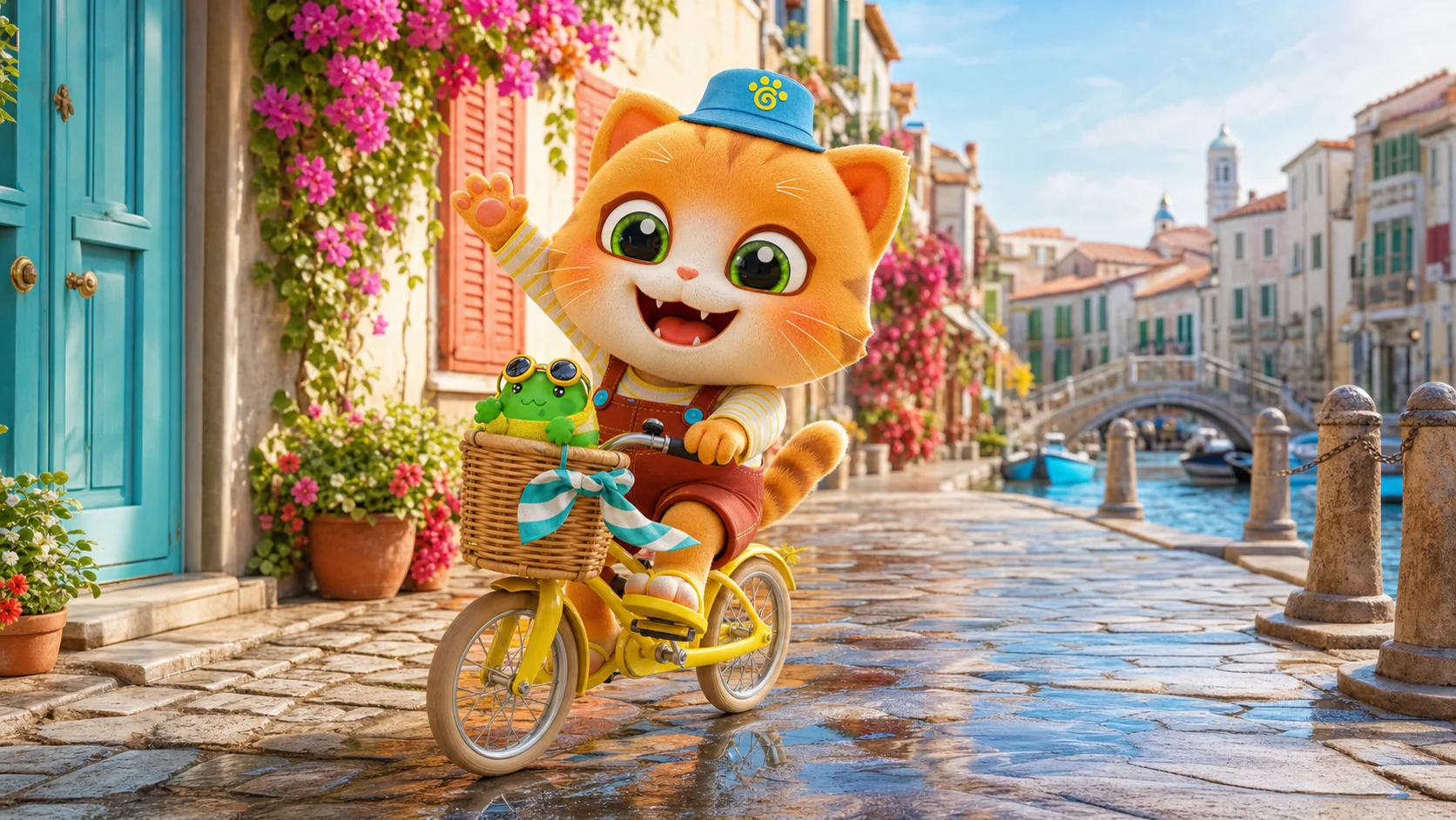
Retail and hospitality are built around moments: arrival, discovery, choice, assistance, and memory. An interactive avatar can support those moments when it has a clear role and fits the physical environment.
The objective is not to place a character on every screen. It is to use a recognizable digital presence where communication, entertainment, or guidance can become more engaging.
What can an interactive avatar do?
In retail or hospitality, a digital character can:
- welcome visitors and introduce a space;
- present products, menus, or experiences;
- explain promotions in a branded voice;
- guide people toward services or activities;
- lead family-friendly interactions;
- support event moments and launches;
- provide selected information in multiple languages;
- hand off to a human team member when needed.
The best role is specific. “Help with everything” is rarely a useful design brief.
Retail applications
Product storytelling
A character can explain how a product fits into a routine, demonstrate selected features, or connect several products through a short story. This can be more memorable than repeating catalogue text.
Launches and activations
At a product launch, a live avatar can respond to a host, reveal a feature, or invite audience participation. The character creates continuity between the event and later social content.
Family experiences
Mascots can lead games, learning moments, or simple challenges in shopping malls and family-oriented retail environments. Clear visual cues and short interactions help people join quickly.
Branded navigation
A digital guide can introduce departments, activities, or services. It should complement physical signage and staff rather than create a new obstacle.
Hospitality applications
Hotels, restaurants, and destinations can use characters to express a distinctive welcome.
A restaurant mascot may introduce signature dishes or appear in short menu stories. A hotel character can present family activities, destination highlights, or event information. A tourism mascot can connect online storytelling with physical locations.
The character's role should fit the service tone. A playful mascot may be ideal for family experiences but unsuitable for sensitive service recovery.
Design around the visitor journey
Before arrival
Character content can introduce the destination, explain what to expect, and build familiarity.
At arrival
A screen-based greeting or live event moment can establish the character's presence. Keep the message short and direct.
During discovery
Use the avatar for selected stories, products, or activities where personality adds value.
After the visit
Social content can continue the story, recall a live moment, or invite the audience to meet the character again.
This creates a connected journey rather than an isolated kiosk.
Physical experience considerations
Plan screen placement, sound, lighting, queue flow, and viewing distance. A visitor should understand whether the character is decorative, presenting, or available for interaction.
Touch, voice, camera, and host-led interactions each have different privacy and accessibility implications. Choose the simplest input that supports the experience.
Always provide a graceful inactive state. The character should still look intentional when no one is interacting.
Keep people in the service loop
An interactive avatar should not pretend to replace hospitality. Human staff remain essential for judgment, empathy, exceptions, and complex needs.
The character can handle recurring introductions or create memorable branded moments, then direct visitors to people when appropriate.
Information and brand safety
Maintain approved information, update ownership, and clear boundaries. Prices, availability, health guidance, policies, and personal information may require direct system checks or human confirmation.
If the character uses contextual conversation, define what it can access and what it should never collect or reveal.
Interactive avatar FAQ
Does an interactive avatar need a touch screen?
No. It can be host-led, voice-enabled, camera-aware, or structured around simple audience choices.
Can an existing mascot be used?
Yes. A known mascot can make the experience more recognizable and connect it with existing brand content.
Is the avatar useful outside the venue?
Yes. The same character can appear in social stories, pre-visit information, campaigns, and live streams.
Create one memorable role
The most effective interactive avatar does not try to operate the entire venue. It owns a well-designed moment and performs it consistently.