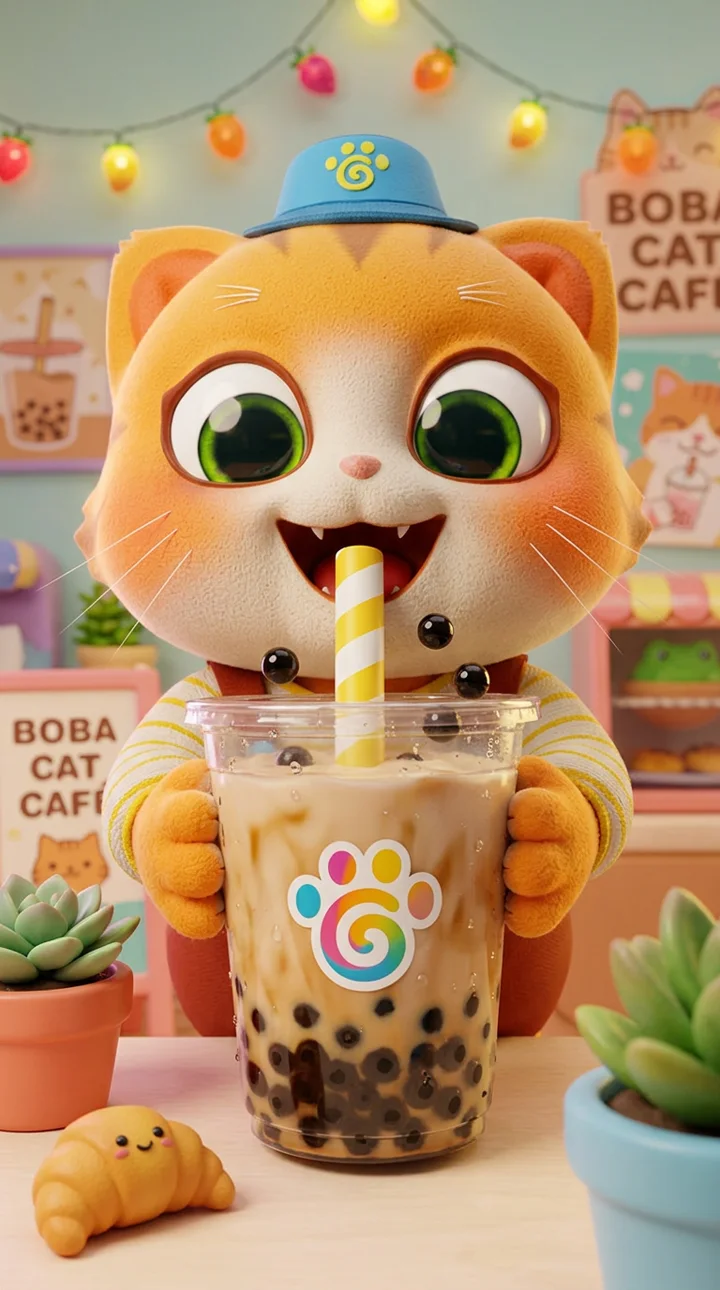
Turning an established 2D character into a 3D avatar is an act of interpretation. The goal is not to add depth at any cost. It is to discover how the character's recognizable design can exist consistently from many angles, under changing light, and in motion.
For IP owners, the most important outcome is continuity. Audiences should recognize the character before they notice the production method.
Why 2D-to-3D conversion is not automatic
A drawing can use perspective tricks, asymmetry, or shape changes that look perfect from one approved angle. A 3D character must work from the front, side, back, above, and in-between.
Questions appear immediately:
- How deep is a face that was designed as a flat shape?
- What happens to the silhouette when the character turns?
- Are the eyes physical forms or graphic elements?
- How do clothing and hair behave?
- Which proportions are essential to recognition?
- How should the character express emotions not shown in the original artwork?
These are creative decisions, not merely technical steps.
Begin with an IP reference audit
Collect the strongest approved references before modeling begins:
- front, side, and three-quarter artwork when available;
- expression sheets and pose studies;
- color specifications;
- costume and prop details;
- examples of approved and rejected variations;
- personality, story, and audience notes;
- existing animation that shows movement style.
If references disagree, identify which source has authority. Resolving contradictions early protects the character later.
Preserve recognition in three dimensions
Silhouette
The outer shape is often the fastest recognition signal. Test the model as a dark silhouette from key angles before focusing on small details.
Face
Eye spacing, brow shape, cheeks, mouth placement, and head-to-body proportion strongly influence identity. Small changes can make a familiar character feel like a relative rather than itself.
Color and material
A 2D color does not respond to light. In 3D, material choices determine whether the same color feels soft, glossy, furry, plastic, or fabric-like. The material should support the character world.
Signature details
Accessories, markings, clothing, or unusual proportions may need extra protection because they carry recognition. Document them as invariants.
Design the character for expression
A beautiful neutral model is not enough. The character needs a useful emotional range.
Start with expressions central to its personality rather than an arbitrary list. A playful character may need curiosity, anticipation, mischief, surprise, and delight. A reassuring character may need attentive listening, gentle concern, and calm encouragement.
Test transitions as well as final poses. Personality often appears in how quickly or softly an expression changes.
Define movement language
Movement should answer questions about weight, energy, confidence, and attention. Does the character lead with its head, chest, or feet? Are gestures broad or contained? Does it bounce, glide, stomp, or pause?
These decisions help content and live performance feel consistent. They also prevent a distinctive model from moving like a generic template.
Prepare for more than one use case
The first project may be a short video, but an owned avatar can later appear in still imagery, social stories, presentations, live streams, or events.
Prepare the core character for flexibility without adding every possible feature at once. Prioritize the expressions, movements, outfits, and environments required for the first audience experience, then extend the system based on real use.
Review with the right questions
Do not evaluate only whether the 3D model looks polished. Ask:
- Is the character recognizable without its logo?
- Does it feel correct from multiple angles?
- Do expressions look like this character's emotions?
- Does movement reinforce personality?
- Can the asset support the intended content or live use?
- Are visual changes documented for future work?
Approval should include both IP owners and the people responsible for character performance.
2D-to-3D avatar FAQ
Will the 3D character look exactly like one drawing?
It should preserve the approved identity, but some interpretation is necessary so the design works from every angle and in motion.
Do we need complete turnaround artwork?
It helps, but development can begin from strong approved references. Missing views should be resolved collaboratively and documented.
Can the original 2D style remain visible?
Yes. Materials, proportions, lighting, and rendering can preserve a stylized character language rather than forcing realism.
Build depth without losing identity
The best 3D translation does not make audiences relearn the character. It gives a familiar identity new expressive possibilities.
Meet Oyen and Le Moo, two characters moving through the NeoAvatar world.